Cloud Computing
Cloud Computing Costs in 2026: How to Stop Overpaying
Cloud cost optimisation for 2026: rightsizing, storage tiers, egress, idle resources and the billing habits that stop a small team overpaying.
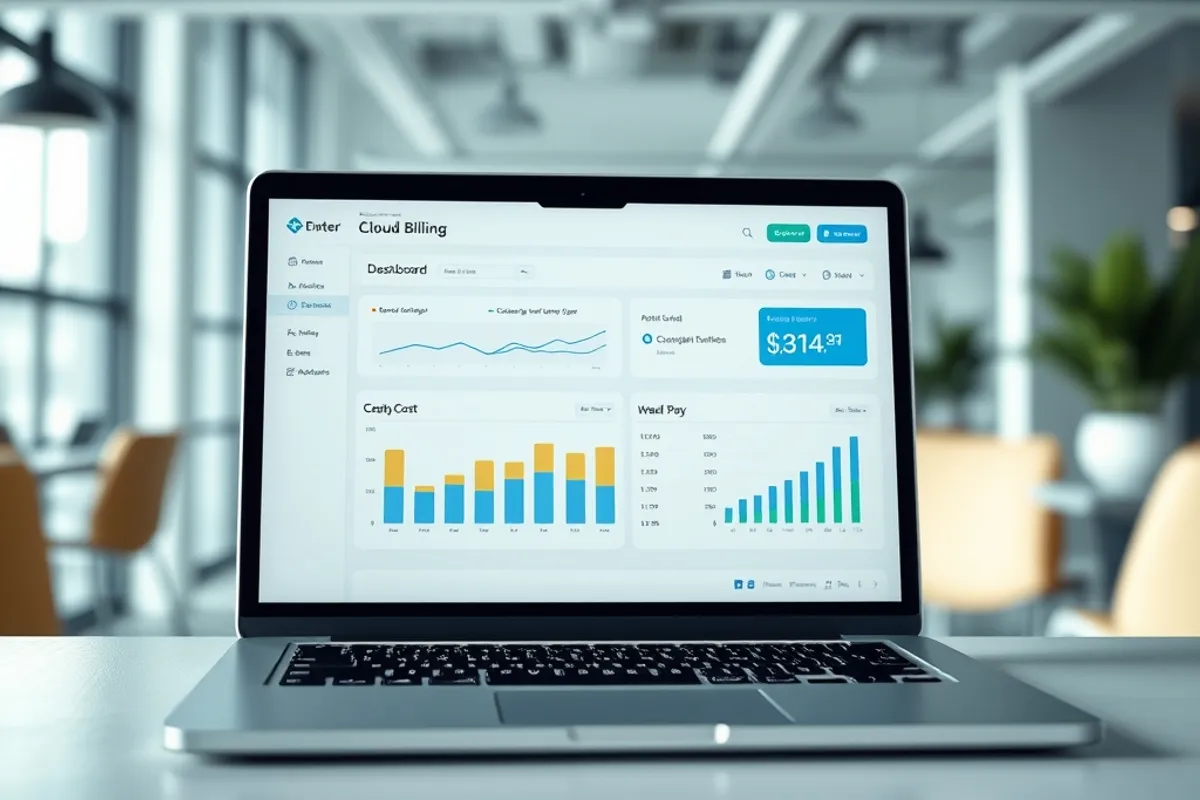
Cloud bills do not usually jump because of one big decision. They grow because of many small ones nobody revisited: a test server that stayed on after the project ended, a database sized for a launch that never came, a storage bucket collecting logs nobody reads, a data transfer path that leaves the cheap region every night.

See the bill by service and owner
Most providers let you tag resources, and most teams do not. Tag by project, environment and owner, then build a report that groups cost by tag. Without that view, every optimisation is a guess, and the first question in a cost review, who owns this, has no answer.
Set a monthly budget alert at a level that would surprise you, not at the level you hope to spend. An alert that fires after the money is gone is a receipt, not a control. Review the top ten line items each month; they usually account for most of the bill and they change slowly.
The cheapest cloud resource is the one you remembered to turn off.
Rightsize before you reserve
Reserved instances and savings plans reduce the price of a resource you already need. They do not fix a resource that is twice the size it should be. Look at CPU and memory over four weeks, not at a single peak, and move workloads down a size where the headroom is comfortable. Then commit to savings on the stable baseline.
The same logic applies to databases. A managed database with high availability is worth it for production and wasteful for a staging environment used twice a week. Match the tier to the job, and turn off what nobody uses.

The levers that move the bill
Compute and storage are the visible costs, but egress and idle resources are where small teams lose money quietly. Data leaving the provider's network is often the most expensive surprise, especially for media, backups and cross-region traffic.
Turn off non-production environments outside working hours. Move cold data to cheaper storage tiers with a lifecycle rule. Delete unattached volumes and old snapshots. Keep backups in the same region as the restore target. Cache static assets close to users to cut egress. Use one logging retention period and enforce it. Each is small on its own; together they often remove twenty to forty percent of a bill that was never designed, only accumulated.
Make cost part of engineering
Cost is an architectural property, like latency or reliability. Put the monthly number in the same review as the incident report, and ask which change would reduce it without hurting the product. When a new service is proposed, require an estimate of its monthly cost and its owner before it ships.
A simple rule helps: every environment has an expiry date and an owner. Staging that has no expiry becomes permanent. A proof of concept with no owner becomes production by accident. Writing the date down is the cheapest cost control available.

When to leave the cloud
For a steady, predictable workload with a small team, a dedicated server can be cheaper than a cloud bill with egress and managed services. That is not an argument against cloud; it is an argument for checking the number. If the workload is stable and the operational burden is low, compare the total cost honestly before renewing.
For the move itself, read our cloud migration checklist. For the code that runs there, see our small-team delivery guide.